
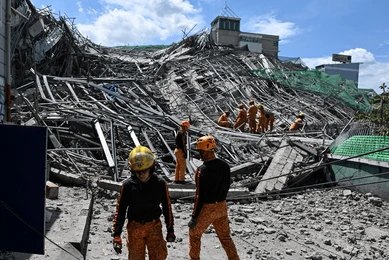
Twin earthquakes struck Venezuela on June 24, 2026, killing more than 3,500 people and leaving up to 50,000 others still unaccounted for under the rubble.
Story Highlights
- Two powerful earthquakes — magnitude 7.5 and 7.2 — hit northern Venezuela within seconds of each other on June 24, 2026.
- The official death toll climbed to 3,535 by early July, with over 16,700 injured and more than 17,000 left homeless.
- The United Nations estimates up to 50,000 people remain unaccounted for, possibly still buried in collapsed buildings.
- Satellite data shows roughly 590,000 buildings were damaged, with 80% of structures in the hardest-hit La Guaira state destroyed.
A Disaster Strikes in Seconds
On June 24, 2026, two massive earthquakes hit northern Venezuela just 39 seconds apart. The first measured 7.2 in magnitude. The second, the main shock, hit at 7.5. Together, they caused what experts are calling Venezuela’s worst earthquake disaster in more than a century. The coastal state of La Guaira took the hardest blow, with officials reporting that 80% of buildings there collapsed entirely.
Venezuela’s Health Minister, Carlos Alvarado, appeared on state television the night of June 24 to report 235 deaths and 4,300 injured in the immediate hours after the quakes. Those numbers were only the beginning. By July 5, Reuters reported the death toll had risen to 3,342, based on figures from Venezuela’s Information Ministry. By July 7, the official count stood at 3,535 dead and 16,740 injured, with more than 17,000 people left without homes.
The Scale of Destruction Is Hard to Grasp
Satellite imagery analyzed after the quakes shows roughly 590,000 buildings damaged across Venezuela. The United Nations estimates that up to 50,000 people may still be unaccounted for — possibly trapped under rubble. Rescue teams pulled at least one survivor from the debris after eight days. The sheer scale of building damage explains why the death toll kept rising week after week as crews cleared debris and reached more remote areas.
The Venezuelan government restricted access to La Guaira starting at 8:00 PM on the day of the disaster. This blocked independent media and international observers from verifying conditions on the ground. Human rights group PROVEA reported some inconsistencies in early casualty updates, and the New York Times described the June 29 death toll of 1,450 as a “substantial undercount.” These discrepancies are common in major disasters — early figures almost always rise as rubble is cleared and remote areas are reached, a pattern seen in the 2010 Haiti earthquake and the 2023 Turkey-Syria earthquakes as well.
International Aid Arrives — Including From the U.S.
The United States moved quickly to help. The USS San Antonio, a Navy transport ship, arrived at Venezuela’s Port of La Guaira on July 9, 2026, to support earthquake relief efforts. The U.S. Embassy in Caracas announced that senior officials from the U.S. Department of Agriculture and U.S. foreign assistance programs were on the ground coordinating aid. Starlink satellite internet was also deployed rapidly to help with disaster communications, drawing praise from the U.S. Embassy.
🚨 VENEZUELA EARTHQUAKE DEATH TOLL RISES AGAIN
The numbers from Venezuela are getting worse, and the disaster is now shifting from rescue operations into a full-blown humanitarian and public-health crisis.
📊 LATEST CONFIRMED NUMBERS AS OF JULY 9:
⚫ 3,889 people confirmed… pic.twitter.com/zc1Ns2xPeV
— Gunnys Adventures (@DerrickSalas9) July 10, 2026
Amazon announced support for humanitarian airlift operations. Haiti dispatched a medical mission to assist survivors. The United Nations continued coordinating international humanitarian assistance as the death toll climbed. Despite political tensions between Venezuela’s government and some Western nations, aid continued to flow into the country. The disaster exposed decades of poor building construction under Venezuela’s socialist government — structures that simply could not survive a quake of this magnitude. For the families still searching for missing loved ones, politics is beside the point. They need help now.
Sources:
science.nasa.gov, globalnation.inquirer.net, facebook.com, france24.com, reuters.com, cnn.com, news.un.org, en.wikipedia.org, youtube.com, reddit.com, miyamotointernational.com, ketr.org, ve.usembassy.gov, instagram.com, nprillinois.org, diplomacyandlaw.com, ifrc.org, reliefweb.int, climateknowledgeportal.worldbank.org, usgs.gov