
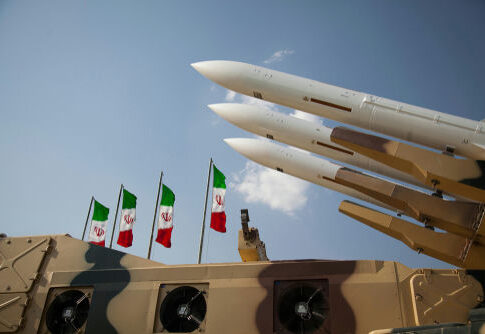
U.S. Central Command just shot down four Iranian attack drones aimed at the world’s most critical oil chokepoint, sending a stark warning to Tehran and every America-hating regime watching.
Story Snapshot
- U.S. Central Command says it shot down four Iranian one-way attack drones launched toward the Strait of Hormuz and then hit Iranian radar sites in response.[2][1]
- The command says the drones posed an “immediate threat” to regional maritime traffic in a corridor that carries a huge share of the world’s oil.[2]
- Follow-on strikes targeted Iranian coastal surveillance radar and drone command infrastructure in Goruk and on Qeshm Island to prevent further attacks.[2][1]
- The incident fits a long pattern of Iranian harassment near Hormuz, but under Trump’s second term the response is faster and far less restrained than during prior administrations.[1][5]
CENTCOM Intercepts Iranian Drones Over Strategic Oil Lifeline
U.S. Central Command reported that American forces “moments ago” shot down four Iranian one-way attack drones launched toward the Strait of Hormuz, a narrow waterway that carries a major share of global oil shipments.[2][1] The command said the attack drones posed an immediate threat to regional maritime traffic, giving U.S. forces clear legal and moral ground to act in self-defense and protect commercial shipping lanes used by American allies and partners.[2] No U.S. forces were reported harmed in the engagement.[1]
Central Command described the aircraft as one-way attack drones, the same class of systems Iran and its proxies have used across the Middle East to strike oil infrastructure, U.S. facilities, and civilian targets.[2][4] These platforms are designed to crash into a target with an explosive payload and cannot be recovered, which is why military officials treat them as offensive weapons rather than simple surveillance tools.[4] The statement framed the shootdown as part of an ongoing defensive posture against “unjustified Iranian aggression.”[2]
Follow-On Strikes Hit Iranian Radar and Command Sites
After neutralizing the four incoming drones, U.S. forces moved quickly to hit the systems that enabled the attack.[2][1] Central Command stated that American forces struck Iranian coastal surveillance radar sites in Goruk and on Qeshm Island, key locations on or near Iran’s southern coastline that help Tehran track and target shipping and U.S. assets in the area.[2][1] The command said these follow-on strikes were taken to defend against further attacks and to disable capabilities that threatened ships transiting regional waters.[1]
A separate Central Command release described additional self-defense strikes against Iranian radar and drone command and control facilities in Goruk and Qeshm Island after Iran previously shot down a U.S. MQ‑1 drone operating over international waters.[1] U.S. fighter aircraft destroyed Iranian air defenses, a ground control station, and two one-way attack drones that posed clear threats to commercial shipping.[1] That sequence underscores a broader shift: when Iran targets U.S. assets or endangers maritime traffic, Washington is now hitting not just the incoming weapon but also the infrastructure behind it.
Why the Strait of Hormuz and Iranian Drones Matter to American Readers
The Strait of Hormuz is one of the world’s most important maritime chokepoints, and Iran has repeatedly tested U.S. resolve there by harassing tankers, targeting drones, and challenging international airspace and waters.[1][5] In 2019, Iran’s air defense forces shot down a high-altitude U.S. RQ‑4 surveillance drone near the same region, with Washington saying the aircraft was in international airspace and Tehran insisting it violated Iranian territory.[5] That incident nearly triggered a larger conflict and illustrated how quickly a single drone engagement can escalate.[5]
🕒 • 2026-06-05T23: 08 to 23: 12 … Input events and claims by time order
🇺🇸 • 2026-06-05T23: 08 … U. S. leadership remarks on appointment timeline@POTUS responded to a question on how long @pulte would remain “in that position,” saying the duration “depends on how long it… https://t.co/W7f1nD4nOJ
— U.S.A.I. 🇺🇸 (@researchUSAI) June 5, 2026
Under President Trump’s second term, the pattern now looks different from the era of delayed or symbolic responses that many conservative Americans remember all too well. Central Command’s latest language emphasizes self-defense, protection of shipping, and immediate retaliation against enabling sites, not drawn-out “red line” debates or apologetic messaging.[1][2] For readers worried about globalism, energy prices, and U.S. deterrence, these engagements highlight a hard reality: when Iran pushes near Hormuz, American strength on the front end can help prevent much costlier chaos at home later.
Sources:
[1] Web – U.S. CENTCOM Shoots Down More Iranian Attack Drones
[2] Web – U.S. Shoots Down Iranian Drones Launched At Strait Of Hormuz: Official …
[4] Web – US forces shot down four Iranian drones headed toward Strait of …
[5] Web – Hormuz flashpoint: US downs Iranian drones, strikes radar sites; Trump …